
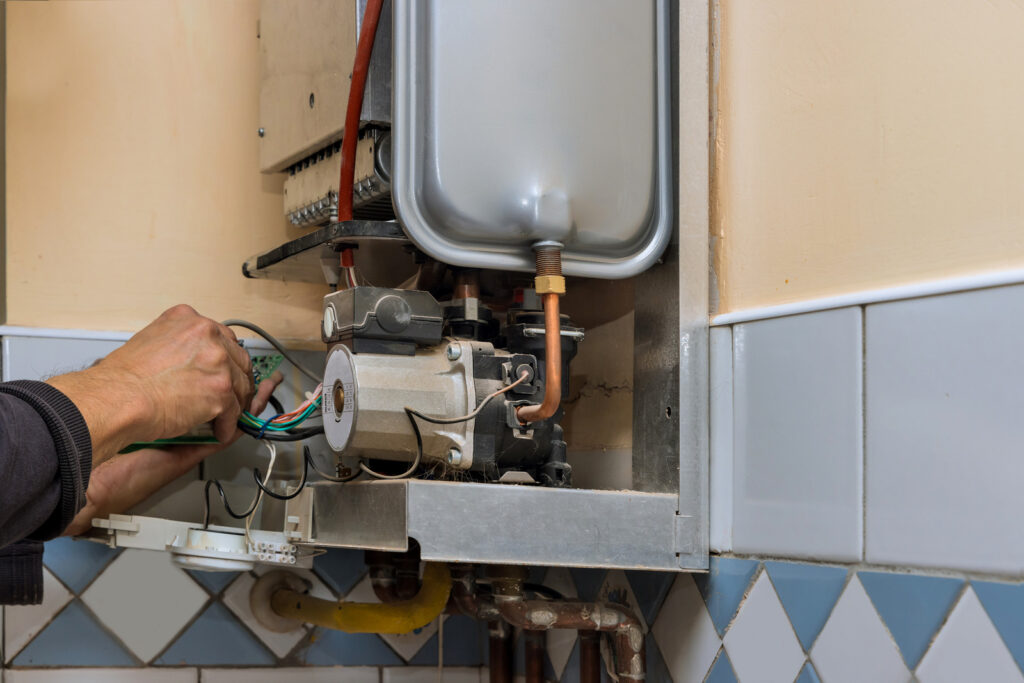
A water heater problem rarely announces itself clearly. It’s usually a small inconvenience at first, water that takes longer to heat, a strange noise during the night, or a temperature that swings for no obvious reason, and it’s easy to write these off as one-time flukes. Recognizing the pattern early is what separates a straightforward water heater repair in Ottawa from a full replacement six months later, once a minor issue has had time to get worse.
What Are the Most Common Signs Your Water Heater Needs Repair?
A few symptoms show up more often than others and each one usually points to a specific problem. No hot water all usually means the heating element has failed in an electric unit or the pilot light is out in a gas unit. Water that stays lukewarm but never gets hot often points to a thermostat issue or a heating element that’s partially broken instead of completely dead. Rust-colored water is a sign of corrosion inside the tank. While it doesn’t always mean the heater will fail away it rarely goes away on its own.
Rumbling, popping or banging sounds coming from the tank are always due to sediment buildup at the bottom of the unit. Minerals in the water settle over time. Harden into a thick layer. Water pooling around the base of the tank is one of the serious warnings. It usually means there’s a crack or a seal failure and that kind of damage won’t fix itself. In fact it can get worse quickly.
Inconsistent water temperature, like when the hot water runs out faster than it used to, signals two possible issues: sediment reducing the tank’s capacity or a heating element that no longer works at full strength.
How to Troubleshoot Water Heater Problems Before Calling a Plumber
Not every problem needs a service call. Most homeowners can safely try basic checks first. If there is no water at all, checking the circuit breaker for an electric unit or confirming that the pilot light is lit on a gas unit is a reasonable first step because both are common and simple causes. For a temperature check the thermostat setting, which should normally sit around 120°F for most households, can rule out a setting that is simply too low.
Unusual noises are worth listening to or ignoring but they are not something a homeowner should try to fix directly because draining sediment from a tank requires handling hot water and pressure safely. If the pilot light on a gas unit will not stay lit after being relit that often points to a thermocouple issue rather than something that will resolve with repeated attempts.. If there is any sign of water pooling, at the base of the tank that is not a troubleshooting situation. It is a situation because a compromised tank can fail more seriously with little warning.
When Does a Repair Make Sense Versus a Replacement?
This is where water heater troubleshooting on a homeowner’s part usually ends and a professional assessment becomes worthwhile. Age matters more than most people expect. A unit under six or seven years old with an isolated problem, like a failed heating element or a stuck thermostat, is usually a good candidate for repair. A unit approaching or past ten years old showing multiple symptoms at once, like rust colored water plus inconsistent heating, is often better replaced than repeatedly patched, since further repairs tend to become a short-term fix on a unit that’s nearing the end of its service life either way.
A plumber assessing the unit in person will typically check the tank for corrosion, test heating elements or the gas burner assembly, inspect for leaks at fittings and the tank itself, and flush sediment if that’s contributing to the noise or reduced capacity. That combination of checks gives a clearer picture than any single symptom on its own.
Preventing Repeat Water Heater Problems
Water heater maintenance done regularly helps prevent repair problems from happening in the place. Flushing the tank a year to get rid of sediment that builds up inside, checking the anode rod every few years because it gets worn away to protect the tank and setting the thermostat to a good temperature all help the unit last longer. Houses that have water, which is normal, in some areas of Ottawa experience more sediment buildup so regular flushing is even more important than it seems for a home that has never done it before.
A water heater issue that seems minor can escalate quickly, particularly leaks or a pilot light that won’t stay lit, both of which are signs of an underlying problem rather than something to keep monitoring. A licensed plumber familiar with the mix of older and newer housing stock across Ottawa will be able to diagnose the actual cause rather than just addressing the symptom, which matters most on units that are already showing more than one warning sign at once.
Catching these issues early, rather than waiting for a full breakdown, is usually what keeps a repair affordable and avoids a cold shower on a morning when there’s no time to deal with it.
FAQs:
How do you troubleshoot water heater problems at home?
Basic troubleshooting starts with checking the circuit breaker or pilot light when the water heater offers no water. Next, confirm the thermostat setting if water heater temperature is inconsistent. If the water heater makes noises or shows any sign of leaking at the tank base a professional should handle the problem instead of attempting DIY fixes.
Should I. Replace my water heater?
If the water heater is under six or seven years old and has one isolated issue, repair is usually worthwhile. If a water heater is nearing or past ten years old and displays symptoms at once, such as corrosion combined with inconsistent heating, it is often more cost effective to replace the water heater rather than keep repairing.
Why does my water heater make noise before it stops heating?
Rumbling or popping noises usually arise from sediment that has built up and hardened at the bottom of the water heater. This sediment reduces heating efficiency and tank capacity over time. Flushing a water heater can often resolve the noise if the issue is caught before it leads to a serious heating element problem.