
Slow drains. Weird smell nobody can pinpoint. Gurgling sounds from the toilet that definitely weren’t there a few months ago. Most homeowners notice these things, assume it’s a minor drain issue, pour something down the sink, move on. Sometimes that works out fine. Sometimes the problem’s a lot deeper, literally, and no amount of drain cleaner is touching what’s actually going on inside the sewer line.
That’s what a sewer camera inspection is actually for. Getting a real look at what’s happening underground before a small issue turns into a backed-up disaster or an emergency excavation nobody planned for or budgeted.
This post covers the warning signs worth taking seriously, when scheduling a sewer inspection service actually makes sense, and why catching sewer problems early almost always costs significantly less than finding out about them the hard way.
Why Sewer Problems Stay Hidden So Long
Underground pipes aren’t visible, that’s really the whole problem. Issues develop slowly, sometimes over months, sometimes years, with nothing obvious on the surface until something finally gives completely. Tree roots working into a joint, gradual buildup narrowing the pipe interior, old pipe sections starting to collapse, none of it visible from above without actually sending a camera down there to look.
Let’s face it, sewer lines get zero attention until something goes obviously wrong. By the time it’s obvious though, the problem’s usually been quietly building for a while already.
Warning Sign One: Multiple Drains Slow at the Same Time
One slow drain, probably just that fixture. Two or three drains throughout the house all sluggish around the same time, completely different situation. Multiple drain slowdowns simultaneously almost always point toward the main sewer line rather than individual clogs at each fixture.
When the main line’s partially blocked, every fixture connected to it starts showing symptoms. Kitchen sink, bathroom sink, shower, all of them draining slower than usual at the same time. That specific pattern is a strong signal a sewer camera inspection would give a much clearer picture of what’s actually happening underground.
Warning Sign Two: Gurgling Sounds Nobody Can Explain
That bubbling gurgling sound after flushing or draining water, it’s air trapped in the line trying to get past something blocking it. Normal plumbing doesn’t make that sound. Means air’s moving where water should be moving, which typically points toward a partial blockage somewhere in the system.
Gurgling from multiple fixtures especially, toilet bubbling when the bathroom sink drains, shower gurgling after the toilet flushes, that kind of cross-fixture behavior almost always indicates a main line issue worth actually investigating rather than ignoring.
Warning Sign Three: Sewage Smell Inside the House
Sewer gas has a pretty unmistakable smell, and it shouldn’t ever be noticeable inside a home under normal circumstances. Sewer gases get contained within the pipe system by water seals in drain traps. When those smells make it indoors, something’s wrong, a dry trap, crack in the sewer line, or something more significant allowing gas to escape where it absolutely shouldn’t be.
Beyond being unpleasant, sewer gases include compounds genuinely not good to breathe regularly. Persistent sewage smell indoors warrants a proper sewer inspection service, not just hoping it goes away on its own eventually.
Warning Sign Four: Sewage Backing Up Into Fixtures
Hard to ignore this one. Toilet backing up when the washing machine drains. Water rising in the bathtub when the toilet flushes. Cross-fixture backups like these indicate a main line blockage severe enough to push waste water backward through the system entirely.
Past the wait-and-see stage here. Camera inspection at this point confirms exactly where the blockage is and what’s causing it, tree roots, grease buildup, collapsed section, all possibilities requiring different solutions once actually identified properly.
Warning Sign Five: Random Wet or Lush Patches in the Yard
The green patch in the yard is noticeably lusher than everything around it. Wet soggy area that doesn’t dry out even after several dry days in a row. Both can indicate a sewer line leaking underground, essentially fertilizing and watering that section of yard from below without anyone realizing it.
The sneaky sign looks almost positive at first glance. Random healthy grass patch in an otherwise average lawn, easy to overlook. Connected to a leaking sewer line though, and the problem’s actively getting worse underneath while nobody’s paying attention.
Warning Sign Six: Foundation Cracks Appearing or Getting Worse
Connection most homeowners don’t make immediately. Leaking sewer lines under or near the foundation can erode soil over time, creating voids that affect how the foundation sits, eventually showing up as cracks. Sudden foundation cracks appearing, or existing ones worsening noticeably, sometimes has a plumbing cause rather than a purely structural one.
A sewer camera inspection as part of investigating foundation issues can rule out or confirm a plumbing contribution before expensive structural work starts happening.
Warning Sign Seven: House Is Over Thirty Years Old
Not a symptom exactly, more of a risk factor worth understanding. Older homes, particularly those built before the 1980s, sometimes have clay or cast iron sewer lines that have had decades to accumulate root intrusion, corrosion, and general deterioration. The National Association of Home Inspectors has flagged sewer line problems as among the more common issues found in older homes that weren’t identified before purchase.
Proactive sewer inspection service on an older property, even without obvious symptoms showing up, gives a clear picture of actual line condition before something fails unexpectedly and expensively.
Warning Sign Eight: Before Buying Any Home
Probably the most financially important one honestly. Standard home inspection doesn’t include sewer line conditions at all. The inspector looks at visible systems, accessible areas, and surface-level plumbing. What’s underground in the sewer line, not part of that evaluation whatsoever.
Buying without a sewer camera inspection means potentially inheriting whatever’s been quietly developing underground for years. Root intrusion, deteriorating pipes, partial collapses, all of these cost thousands to fix. Finding out before closing gives real negotiating room and avoids inheriting a problem the previous owner might not have even known existed.
What the Inspection Actually Looks Like
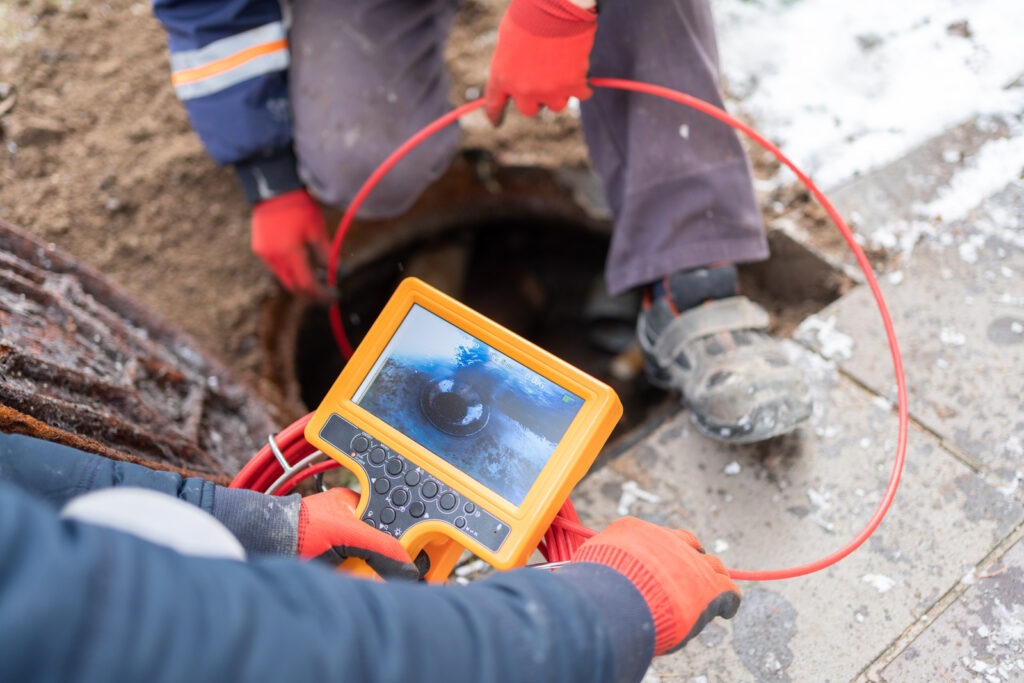
Pretty straightforward honestly. Flexible cameras get fed into a cleanout access point, usually near the foundation or in the yard somewhere. Camera transmits live video of the pipe interior as it moves through, showing buildup, cracks, root intrusion, joint separations, anything affecting pipe condition.
The whole process takes under an hour for most residential properties. No digging, no disruption, just a clear visual record of exactly what’s going on down there.
Final Thoughts
Sewer problems rarely announce themselves dramatically until they’re already serious. Warning signs show up first, multiple slow drains, gurgling sounds, sewage smells, wet yard patches, cross-fixture backups, and those signs give real opportunity to get ahead of things before excavation becomes the only remaining option. A sewer camera inspection turns an underground unknown into something actually visible and manageable. Catching whatever’s down there early almost always costs significantly less than discovering it through a backup at two in the morning when there’s no other choice left.
Frequently Asked Questions
How long does a sewer camera inspection actually take?
Most residential inspections take thirty minutes to an hour depending on pipe length and access point location. The camera feeds through a cleanout access point with results visible in real time, making it one of the faster and less disruptive diagnostic options available for plumbing issues.
Can a sewer camera inspection actually find tree root intrusion?
Yes, and it's one of the most common findings in older neighborhoods honestly. Tree roots infiltrate sewer lines through small joint gaps and grow significantly over time. A sewer inspection service identifies root intrusion location and severity, helping determine whether cleaning or actual pipe repair is the appropriate next step.
Should a sewer camera inspection be done before buying a house?
Generally yes, especially for older properties. Standard home inspections don't cover underground sewer line condition at all. A camera inspection before closing reveals existing problems that could require expensive repair after purchase, giving buyers important information and real negotiating leverage before finalizing anything.