
Filed under Cast Iron & Older Homes · By Michael and the team at The Irish Plumber
Why cast iron stacks crack
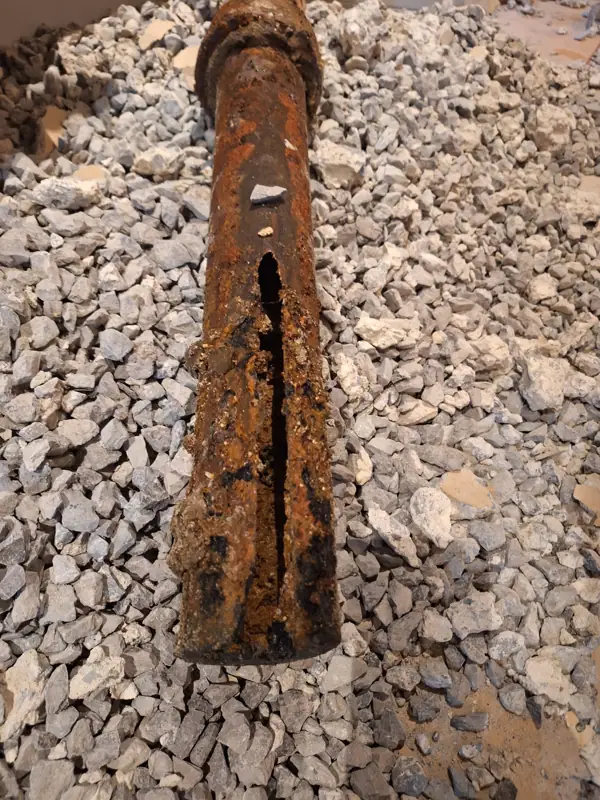
The main stack is the large vertical drain that runs from the roof to the basement. In homes built before the 1970s, it's usually cast iron. Sewer gas and waste slowly corrode the inside. The pipe gets thinner until a seam splits, often along its length, or a joint lets go.
7 signs to look for
- A hairline crack running up the stack. Shine a flashlight along it. Cracks often run vertically and are easy to miss.
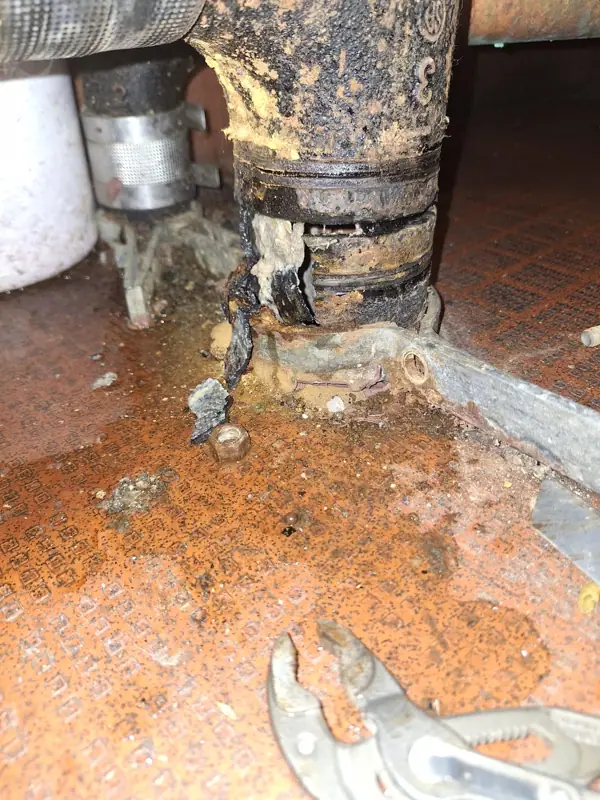
- Rust weeping or crusty patches, especially at joints and where branches connect.
- A sewer smell near the stack or in the basement that comes and goes.
- Drain flies around the basement or a bathroom with no obvious source.
- A ceiling or wall stain below a bathroom, even a faint one.
- Slow drains everywhere at once, from scale narrowing the pipe.
- Your house was built before about 1970 and nobody has replaced the drains.
Don't tap or hit the pipe to test it. Old cast iron can be brittle, and a crack can open up.
What happens next
A camera inspection shows the inside of the stack and the building drain, so you know whether you need one section replaced or the whole run. Replacing a section in an unfinished basement is a much smaller job than opening finished walls, so if you're planning a renovation, do it first.
Think your stack is cracked?
We'll camera it, show you the footage and give you one written price.
We replace cast iron most often in homes built before the mid-1970s, in neighbourhoods like Westboro and Carlington, Alta Vista and older parts of Nepean. Find the location nearest you.